
 Search
Optometry Industry Trends to Keep Your Eye on In 2026: Insights for Providers
Discover how AI exams, AR try-ons, sustainable eyewear and smarter omni-channel dispensing will shape vision care in 2026 while boosting team training, capture rates and patient financing.
By Sarita Harbour, Digital Writer
Reviewed by Dr. Ryan Beck, Doctor of Optometry
Dec 19, 2025 - 6 min read


Key Takeaways
- Emerging technologies like AI diagnostics, AR virtual try-ons, sustainable materials and omni-channel buying experiences are shaping the future of eye care, offering providers new ways to enhance patient outcomes and satisfaction.
- Offering eco-friendly frames and highly personalized premium lenses can help address both environmental concerns and patients' desire for tailored vision solutions.
- Prominently presenting flexible financing solutions at every stage, from appointment scheduling to checkout, can help patients manage costs and may support increased adoption of premium products and services.
As you plan for 2026, you’re navigating a vision industry where expectations continue to rise. Today’s patients want precision, convenience and clear choices that fit their budgets. Fortunately, tech-enabled eye exams are becoming simpler to experience and easier to explain, while the optometry industry is seeing stronger interest in personalized lenses, sustainable frames and transparent pricing that makes premium options feel more affordable.
Discover the trends most likely to shape next year, including diagnostics assisted by artificial intelligence (AI), augmented reality (AR) try-ons, sustainable materials and omni-channel optical in the glasses industry. Then turn them into practical steps you can start using right now.
You’ll find quick wins for training, merchandising and measurement. You’ll also see simple ways to present patient financing at key decision points.
New Optometric Technology for Eye Exams
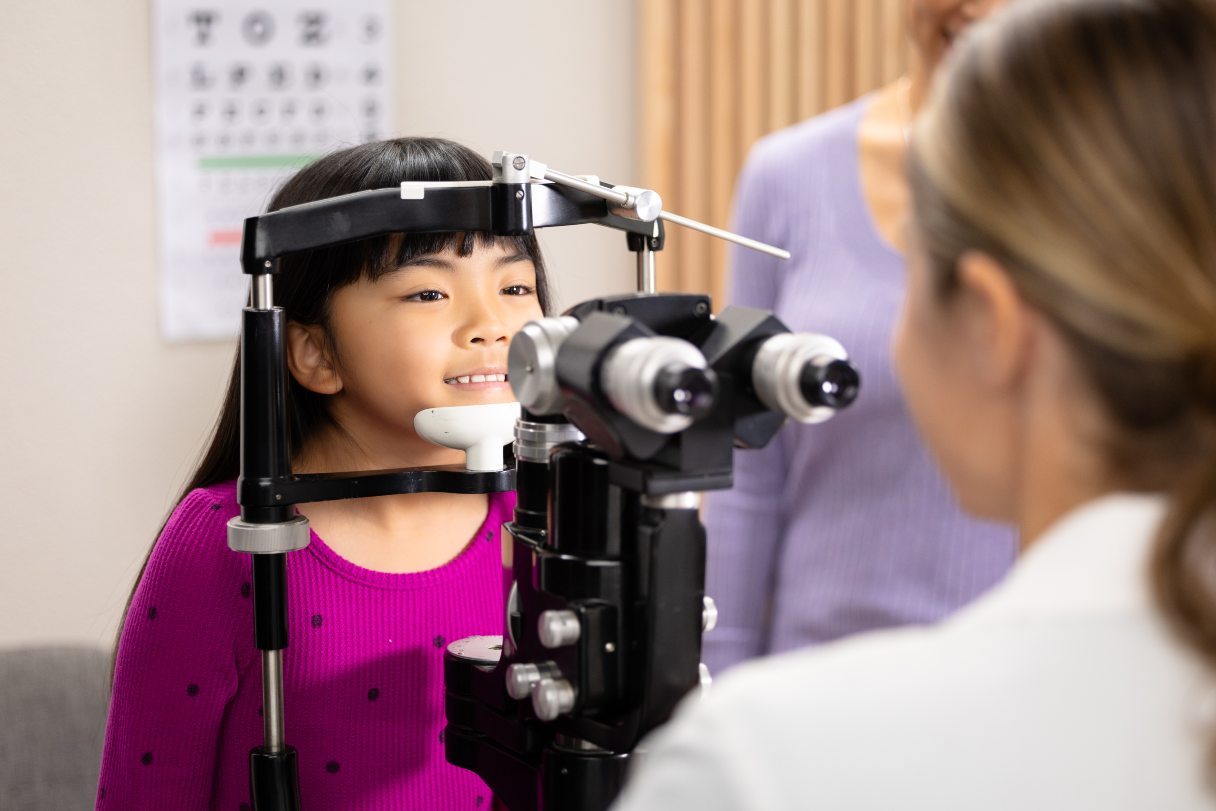
New optometrist technology for eye exams can help streamline your workflow, reduce variability and help make treatment recommendations easier to understand. Connect online and in-store messaging, integrate imaging into your electronic health record (EHR) system and use plain language patient-education scripts to support consistent, next-step recommendations. This approach also helps your practice compete with online retail solutions.
Optometrist technology
New research highlights a growing shift in eye care from traditional, manual tools to advanced, data-driven systems powered by artificial intelligence and deep learning, improving diagnostic accuracy and efficiency across the field.
AR and AI innovations revolutionizing the eyecare industry
AI models are increasingly applied in ophthalmic imaging, particularly in optical coherence tomography (OCT) and glaucoma workflows, helping enhance diagnostic accuracy and consistency while supporting more efficient clinical decision-making. Models are also being developed for the detection, diagnosis and management of ocular surface disease. Recent reviews highlight gains in disease detection, along with key implementation considerations such as standards, generalizability and governance, which may improve clinical recommendations and overall workflow efficiency.
Personalized visualization technology for frame selection and prescription accuracy
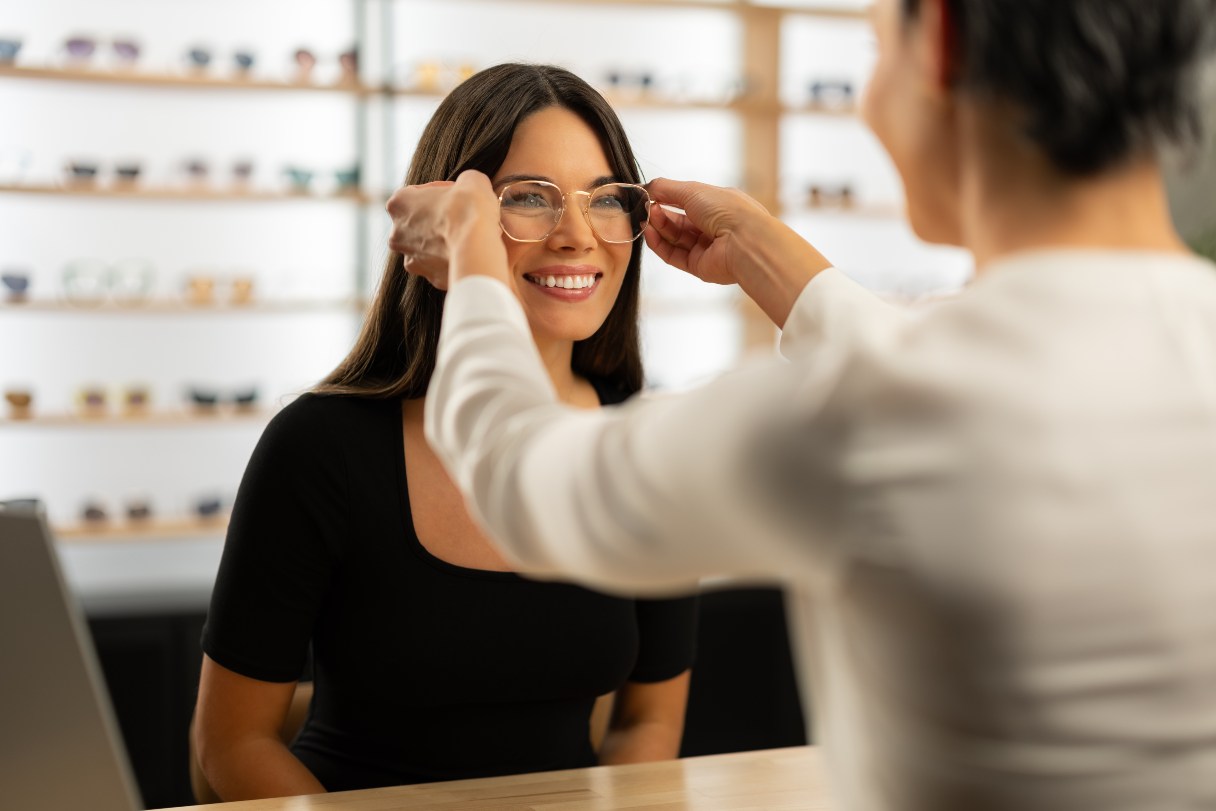
AR virtual try-on (VTO) can help patients see how frames will look on their face before they buy them. A recent study found that smartphone-based interpupillary distance (IPD) measurements can closely match traditional pupilometer readings.1 Peer-reviewed VTO frameworks using 3D face reconstruction from a single image have also seen improvements, offering more accurate overlay and pose estimation that can prove useful in optical settings.2
AI workflow wins, from intake to clinical decision support
Utilization of AI can be integrated at multiple key points in the eye exam process. AI can be used to aid in scribe support for the clinician during the examination. When imaging, AI can combine records and analytics, generate automatic summaries and a complete history of the patient’s information can help guide follow-up care. This can give staff more time to focus on guiding and advising patients.
Digital diagnostics that support planning and outcomes
Advancements have been made in the development and adoption of digital diagnostic tools for validation, bias and governance in the field of optometry. Looking ahead to 2026, this trend will likely continue, with more work on advanced imaging and ways to sort patients by their level of how prone they are to glaucoma and retinal diseases.
Eyewear Industry Trends
Sustainability, customization and attention to repairability and material impact are becoming more visible themes in the glasses industry as eyewear evolves alongside exam technology.
Sustainable, durable and traceable materials
Continued interest in bio-based acetates and recycled inputs is expected as the vision industry strives to minimize its environmental impact. Studies detail hydrothermal (using hot, pressurized water) and chemical methods to recycle cellulose acetate, the main material in many frames. This helps to reduce the environmental impact of waste from the eyewear industry.3
Premium lenses and deeper customization
Free-form or digitally surfaced progressive lenses, combined with attention to individual dispensing parameters such as fit, tilt and wrap, can enhance optical performance and help provide more tailored vision solutions. Research shows that lenses designed with these individualized measurements perform better than conventional or less customized designs, even when the parameters are not perfectly measured.4
Omni-channel buying with in-practice advantages
An omni-channel optical solution for patients can allow them to move seamlessly between in-store, website and mobile experiences. For instance, you could pair curated “good/better/best” lens bundles with transparent pricing and clear financing signage at the mirror and dispensing table. A virtual try-on service may build confidence online or in a kiosk, while expert fitting, adjustments and performance verification remain advantages of in-practice dispensing.
Quick Plays for 2026
Use these quick plays to help align your team, standardize handoffs and share how your patients can use the CareCredit credit card to move forward with their care.*
Make your financing presentations visible at every decision point. Turn each action point into simple, repeatable steps for your practice.
People, process, platforms
Train staff on new tools and scripts that can connect clinical findings to lens performance. Standardize the handoff from the exam room to the optical salesperson. Choose vendors that integrate with your software and help support effective training.
Metrics that matter
Track capture rate, AR/VTO engagement, average revenue per patient, remake rate, second-pair attach and use of patient financing. Test small changes in wording and placement for signage at the mirror and dispensing table.
Make payment options obvious and convenient
Place short prompts at decision points, such as:
- Appointment reminders
- Pretest area
- Exam room
- Dispensing table
- Checkout
- Post-visit emails
Use material with clear, compliant language and a link to “Learn More” or “Get Started.” Coach clinic staff on patient financial communication scripts.
When recommending premium lenses, dry-eye therapies or myopia management packages, use brief, compliant language in the exam room and at dispensing. Include simple prompts on scheduling pages, pretest forms and checkout handouts.
Frequently Asked Questions
Do you still have questions about the optical industry and eyewear trends? Use these answers to align your team and your messaging in 2026.
What new optometrist technology is transforming the eyewear industry?
Emerging AI and imaging technologies are helping eye care professionals streamline diagnostic workflows, reduce variability in measurements and image analysis steps and make treatment planning more consistent and precise. Integrating advanced imaging with data-driven systems can enhance efficiency and support more accurate clinical assessments.6
How can I stand out in the optometry industry?
Offer tech-enabled exams, personalized lens recommendations and sustainable frames. Make patient financing visible from scheduling through checkout so patients know what options you offer to help them follow through with your treatment and/or product recommendations.
What does the future of optometry look like?
The future of optometry is shaped by advanced technology — AI diagnostics, digital imaging and AR try-ons — that streamline exams and personalize care. Patients also want sustainable eyewear, transparent pricing and seamless online-to-office experiences. Practices that incorporate these innovations can better meet patient wants and needs and adapt to evolving industry trends in 2026 and beyond.
A Flexible Financing Solution for Optometry Practices
If you want to help your patients or clients manage the cost of the vision care solutions they want or need, you may want to consider offering the CareCredit credit card as a financing solution. CareCredit allows cardholders to pay out-of-pocket expenses over time (for needs such as premium frames, contact lenses and vision care) while helping to enhance the payments process for your practice or business.
When you accept CareCredit, patients or clients can see if they prequalify with no impact to their credit score and those who apply, if approved, can take advantage of special financing on qualifying purchases.* Additionally, you will be paid directly within two business days.
Learn more about the CareCredit credit card as a financing solution for your optometry practice or start the provider enrollment process by filling out this form.
Expert Reviewer
Dr. Ryan Beck, Doctor of Optometry
Dr. Ryan Beck is an optometrist with over 10 years of primary care experience and two decades in the optical field, specializing in ocular surface and anterior segment disease. He serves as Medical Director of DryEye Rescue and the Dry Eye Rescue Clinic in Boca Raton, FL, overseeing clinical operations, staff development and treatment protocols. Since 2015, he has served as the Optometrist Medical Director for EyeCare Advisors, leading a team of 13 physicians across multiple locations and guiding clinical performance and standards of care. Dr. Beck trained at the University of Miami’s Bascom Palmer Eye Institute and previously provided specialized care with The Eye Centers of Drs. Davis and Morris, including for the Miami Dolphins NFL team. He earned his O.D. from Nova Southeastern University, where he held leadership roles and received clinical honors.
Author Bio
Sarita Harbour is a freelance writer with more than 15 years of experience covering personal finance, consumer banking, small business banking and credit for online audiences. Her work has appeared on sites such as Forbes, TIME/MONEY, MSN, The Motley Fool, First Horizon Bank, Investopedia and more.

Healthcare payment and financing solution
The CareCredit health and wellness credit card helps improve the payment experience for patients and clients, and your financial performance.
Get StartedReady to help more patients and clients get the care they want and need?
Get Started
Related Content
View All
 Articles
 Guides
Ready to help more patients and clients get the care they want and need?
Get Started*Subject to credit approval.
The information, opinions and recommendations expressed in the article are for informational purposes only. Information has been obtained from sources generally believed to be reliable. However, because of the possibility of human or mechanical error by our sources, or any other, Synchrony and any of its affiliates, including CareCredit, (collectively, “Synchrony”) does not provide any warranty as to the accuracy, adequacy or completeness of any information for its intended purpose or any results obtained from the use of such information. All statements and opinions in this article have been evaluated and are supported by the expert reviewer. The data presented in the article was current as of the time of writing. Please consult with your individual advisors with respect to any information presented.
© 2025 Synchrony Bank.
Sources:
1 Han, Kenneth D. et al. “Comparing the effectiveness of smartphone applications in the measurement of interpupillary distance,” Cureus. July 31, 2023. Retrieved from: https://www.cureus.com/articles/169122-comparing-the-effectiveness-of-smartphone-applications-in-the-measurement-of-interpupillary-distance
2 Marelli, Davide et al. “Designing an AI-based virtual try-on web application,” Sensors. May 18, 2022. Retrieved from: https://www.mdpi.com/1424-8220/22/10/3832
3 Slejko Emanuele Alberto et al. “From waste to value: Characterization of recycled cellulose acetate,” Sustainable Chemistry and Pharmacy. March 2024. Retrieved from: https://www.sciencedirect.com/science/article/pii/S2949750723000329
4 Pascual Eduardo et al. “Theoretical performance of progressive addition lenses with poorly measured individual parameters,” Ophthalmic and Physiological Optics. January 9, 2023. Retrieved from: https://pmc.ncbi.nlm.nih.gov/articles/PMC10108105/