
 Search

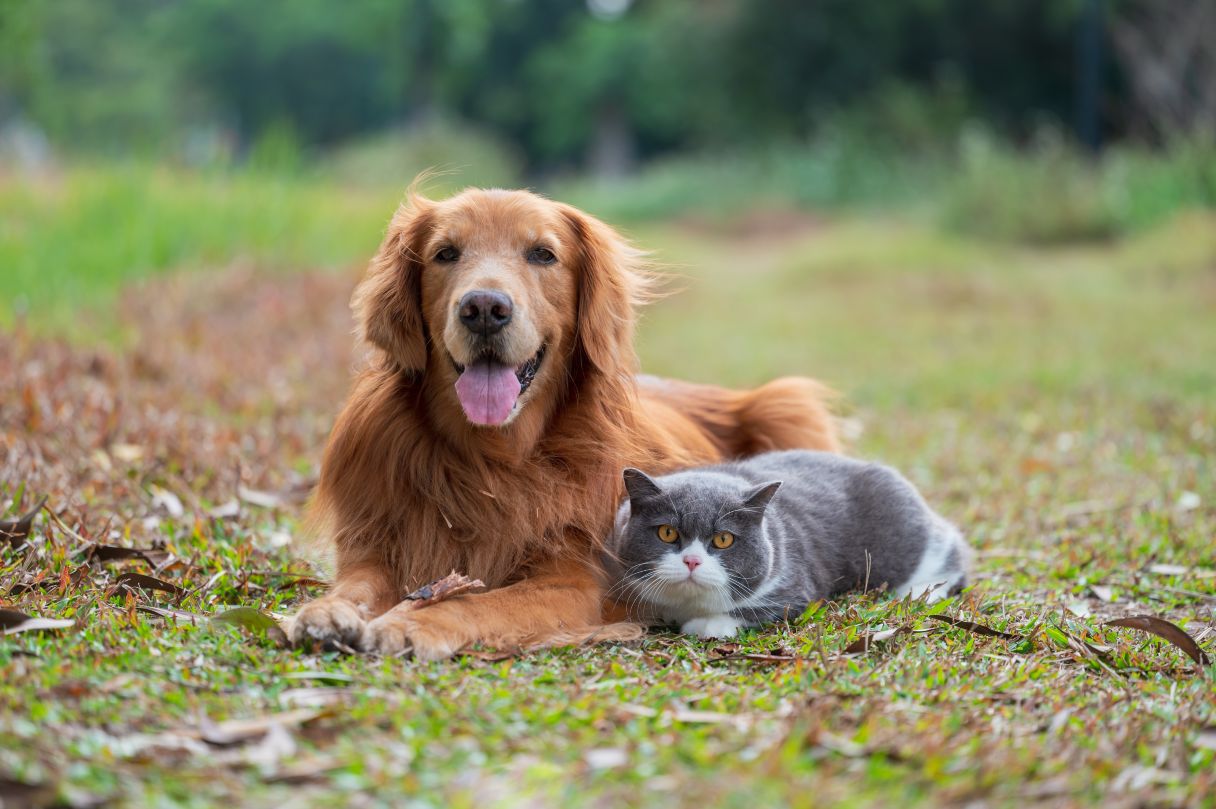
A pet’s age is more than just how long it’s been since they were born. It’s an indicator of where they are on the aging timeline. While it’s commonly understood that dogs and cats both age seven years for every one human year, this is actually a myth.
Why Convert Pet Years to Human Years?
Understanding a pet’s age in terms of human years can help pet parents gain a better understanding of what’s happening in their pet’s body and emotional development as they grow and age.1 Pets go through different life stages that are similar to those of humans, which include the following:2
- Infancy (puppy/kitten)
- Adolescence
- Young adult
- Middle age
- Senior
Each life stage has its own requirements in terms of diet and nutrition, lifestyle and veterinary care. It’s typical for them to start slowing down as they move into middle age, and also to develop more health issues. Knowing your pet’s age and life stage can help both you and your vet determine the best care and preventive measures to help them stay healthy and live longer.2
The Myth of the “7-Year Rule”
The old adage that says one year for a pet equals seven human years began in the 1950s. At the time, the average life expectancy for humans was about 70 years, and for dogs it was about 10 years, which is likely how veterinarians at the time arrived at this calculation, with dogs generally seeming to live one-seventh of a human’s life span on average.3
But vets have since learned that the seven-year rule was a major oversimplification of how pets age. Cats age rapidly during the first years of life, after which aging slows.1 Dogs age at different rates depending on their size and breed.3 What’s more, lifestyle, nutrition and healthcare can affect aging in a pet just as it can in people.4
How Old Is Your Dog in Human Years?
It’s difficult to state a hard and fast rule of thumb to convert a dog’s age to human years. This is because dogs age at different rates according to size, with large dogs aging more rapidly and thus having shorter lifespans than small dogs.3 Genetics is also a factor in how fast dogs age. Breed-specific health predispositions can play a large role in determining a dog’s life expectancy and their rate of aging.2
Generally speaking, by the end of a dog’s first year, they’re equivalent to a 15-year-old human, and by the end of the second year, they’re physically on par with a 24-year-old. After this, dog aging slows down, but many other factors, including weight and breed, may influence the aging process.5
Here is a general breakdown of age in human years for a medium-sized dog weighing 21 to 50 pounds:5
Converting dog years to human years
| Actual dog age (years) | Equivalent human age (years) |
|---|---|
| 1 | 15 |
| 2 | 24 |
| 3 | 28 |
| 4 | 32 |
| 5 | 36 |
| 6 | 42 |
| 7 | 47 |
| 8 | 51 |
| 9 | 56 |
| 10 | 60 |
| 11 | 65 |
| 12 | 69 |
| 13 | 74 |
| 14 | 78 |
| 15 | 83 |
| 16 | 87 |
More Accurate Methods to Convert Dog Years to Human Years
Veterinarians have a more accurate formula for calculating a specific dog’s age in human years, which looks like this:
Human years = [(natural logarithm of dog age) x 16] + 31.6 But because you would either need to be really good at math or have a scientific calculator to work out that formula, it may not be entirely practical for the average pet parent.
A more accessible way to help determine your dog’s probable age in human years is a dog age chart like the one below, which breaks down a dog’s human age equivalent according to size and weight.2
Dog Age to Human Age Conversion Chart by Size
| Actual dog age | Human years (under 20 lbs.) | Human years (21 to 50 lbs.) | Human years (51 to 100 lbs.) |
|---|---|---|---|
| 1 | 15 | 15 | 15 |
| 2 | 24 | 24 | 24 |
| 3 | 28 | 28 | 28 |
| 4 | 32 | 32 | 32 |
| 5 | 36 | 36 | 36 |
| 6 | 40 | 42 | 45 |
| 7 | 44 | 47 | 50 |
| 8 | 48 | 51 | 55 |
| 9 | 52 | 56 | 61 |
| 10 | 56 | 60 | 66 |
| 12 | 64 | 69 | 77 |
| 14 | 72 | 78 | 88 |
| 16 | 80 | 87 | 99 |
| 18 | 88 | 105 | 131 |
How Old Is Your Cat in Human Years?
There is typically less variability with aging in cats than there is with dogs, although factors such as breed and genetics, diet and nutrition, whether a cat lives indoors or outdoors and the healthcare a cat receives can all play a role. Some breeds — such as Siamese and Burmese — are naturally long-lived, and Burmese cats also take longer to finish growing into adulthood.1
In general, though, cats grow to the equivalent of a 15-year-old human during their first year, and age an additional nine years during their second year. After this, on average, cats age four human years for every one year of life.1
Here is a quick-reference chart showing a cat’s actual age equivalent in human years.1
Converting cat years to human years
| Actual cat age (years) | Equivalent human age (years) |
|---|---|
| 1 | 15 |
| 2 | 24 |
| 3 | 28 |
| 4 | 32 |
| 5 | 36 |
| 6 | 40 |
| 7 | 44 |
| 8 | 48 |
| 9 | 52 |
| 10 | 56 |
| 11 | 60 |
| 12 | 64 |
| 13 | 68 |
| 14 | 72 |
| 15 | 76 |
| 16 | 80 |
Why Size and Breed Matter in Pet Aging
Science can’t explain why, but large dogs age at a faster rate than small dogs. Studies have shown that, on average, every 4.4 pounds of body mass correlates with a one-month reduction in a dog’s life expectancy.3 To bear this out, the life expectancy of the Great Dane, a giant breed, is only seven to 10 years.7 Contrast this with the lifespan of the tiniest breed, the Chihuahua, which typically lives at least 14 to 18 years.8
One possible explanation for this is that the rapid growth rate of large-breed puppies makes them more susceptible to cancer and age-related illnesses at an earlier age than smaller dogs.3 While size is the biggest indicator of dog life expectancy, dog breed can make a difference, too.2 For example, the French bulldog, a small breed which is notorious for a long list of breed-specific health conditions, only has an average life expectancy of 10 to 12 years.9
There tends to be less variation in cat life expectancy, although, as mentioned previously, some purebred cat breeds tend to live longer than others.1 In general, nutrition, lifestyle and care are the biggest factors in cat life expectancy.1 This is particularly true when it comes to indoor cats vs. outdoor cats. Cats who live their entire lives indoors generally live more than three times as long as outdoor cats, who are more likely to be exposed to diseases, parasites and life-threatening situations.10
As far as dogs are concerned, size and breed are factors in determining when your dog becomes a senior. Senior pets require adjustments to their lifestyle, nutrition and healthcare routines, which include more frequent checkups to screen for age-related illnesses. So being able to accurately identify when your dog crosses into senior territory will help you plan their care accordingly.2
Practical Tips for Pet Owners
Here are some tips to help you understand and track your pet’s aging so you can adapt their care to the appropriate life stage:
- Keeping up with regular vet checkups and adjust the frequency accordingly to screen for age-related health issues as your pet grows older.
- Matching your pet’s diet and nutrition to their appropriate life stage and making the necessary adjustments as they age.1
- Taking the guesswork out of it by using age conversion charts to tell which life stage your pet is currently in and when to expect them to move into the next stage.
Watch for these signs of aging in your pet so that you can adjust their care as needed:11
- Arthritis or joint problems
- Cognitive decline
- Hair loss
- Hearing or vision loss
- Loss of muscle tone
- Slowing down
- Tooth loss
- Weight gain
Knowing Your Pet’s True Age for the Best Care
Understanding how old your dog or cat is in human years can help give you a better mental picture of the aging process as it happens to them. But the outdated seven-year rule of thumb could cause you to delay important healthcare adjustments that have the potential to increase your pet’s lifespan. Relying on the most current conversion methods, as well as regularly consulting with your vet, will help you keep up with the changes your pet is going through and alter their care as needed.
CareCredit Credit Card Financing for Dogs
Taking good care of your pet’s well-being from nose to tail is essential. Make sure to stay up to date on their regular checkups at the vet to help keep your pet happy and healthy for a lifetime of love. You can use your CareCredit credit card for pet care throughout the year for routine veterinary services as well as emergencies and surgeries.* Use our Acceptance Locator to find a veterinarian near you that accepts CareCredit.
CareCredit is there for you and your pet every step of the way; continue your wellness journey by downloading the CareCredit Mobile App to manage your account, find a provider on the go and easily access the Well U blog for more great articles, podcasts and videos.
In addition to pet care, you can also use your CareCredit credit card for dentistry, cosmetic, vision, hearing, health systems, dermatology, pharmacy purchases, spa treatments and so much more within the CareCredit network. How will you invest in your health and wellness next?
Author Bio
Jean Marie Bauhaus is a freelance writer and novelist who has been writing pet content since 2013. Her work has appeared on Forbes.com, Hill’s Pet, Chewy, AKC.org and more.

Related Tags
Want to share this on social media?






 ARTICLE