
 Search
Audiology Marketing Ideas to Help Differentiate Your Practice
Highlight the benefits of audiologist-led care through comprehensive testing, REM-verified fittings and ongoing care. Explore practical marketing ideas, digital strategies and payment discussion approaches.
By Sarita Harbour
Digital Writer
Jan 02, 2026 - 7 min read


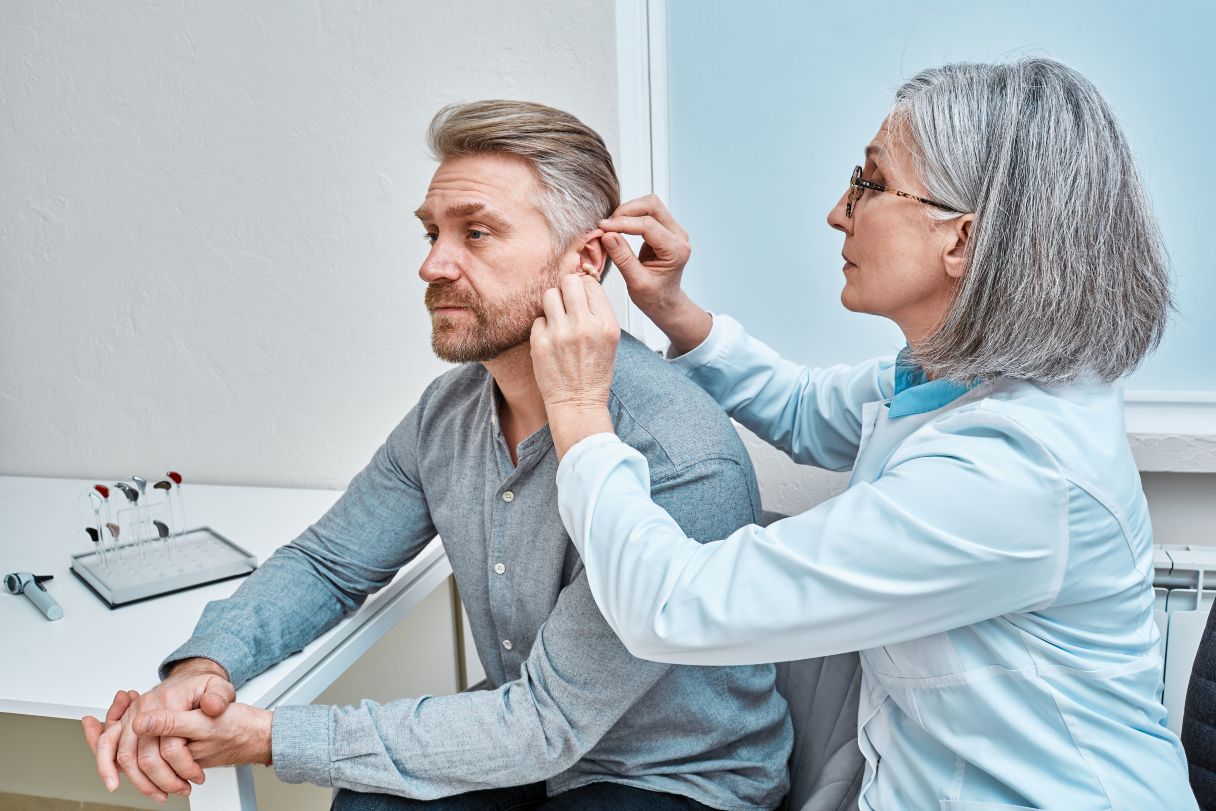
Are you looking for effective ways to make your audiology practice stand out? In today’s environment, it’s important to differentiate your business from other audiologists. Over-the-counter (OTC) hearing devices are now widely available, meaning patients have more options than ever before.¹
Help your business attract and retain patients by focusing on patient communications and marketing messages about services that only audiologists like you can deliver. In at least one randomized clinical trial, audiologist-fitted prescription hearing aids produced better average patient-reported outcomes than self-fit options, although all groups improved.2 Other services may include comprehensive testing, real-ear measurement (REM)-verified fittings, counseling and clear direction on next steps for patients.
According to Synchrony’s 2024 Hearing Health and Loss Prevention Study, many consumers recognize that hearing is a priority, yet relatively few surveyed had visited a hearing professional in the year prior.3 This gap highlights an opportunity for your practice to engage patients.
By using brief educational posts, providing easy booking options and more, you can potentially encourage more appointments. To capitalize on this opportunity, it’s essential to understand the evolving hearing care landscape and the unique value audiologists bring amid growing OTC options.
The Future of Audiology Practices in the Evolving Hearing Care Landscape
A plan that combines input from the audiologist, the patient and care partners can improve the likelihood of a successful hearing device fitting.4 Early OTC market reviews reveal strong registrations led by traditional hearing-aid manufacturers, while smartphone and earbud approaches may broaden access to hearing devices over time.5
Audiology can continue to play an important role as patients look for accurate testing, customized device settings and care they trust. OTC hearing aids are designed for adults with perceived mild to moderate loss.¹ However, they won’t necessarily replace a full diagnostic evaluation, red-flag screening or individualized fitting.
A typical fitting protocol may include an audiologist’s demonstration of real-ear measurement, speech-in-noise testing and structured follow-up. Best-practice fitting protocols produced better outcomes than OTC and other self-fit service models in at least one randomized clinical trial, illustrating the value of the clinical role.2 Verification with probe-tube measures — a recommended step in adult fittings — can further help patients appreciate the value of accurate, in-person professional care.4
Key Strategies to Help Grow Your Hearing Aid Business
Think of your audiology business growth strategy as a patient-friendly path: Highlight clinical value, shift the conversation from price to outcomes and always make it easy for your patients to take the next step.
Develop targeted audiology marketing plans
When crafting your marketing plans, create clear statements on your website, social media channels and print materials to answer common questions immediately. For example, use simple language to explain when OTC devices make sense and when a diagnostic appointment can be an effective first step.
Next, shape your marketing messages for the people you see most — active adults who struggle in restaurants or professionals who need clarity on calls, for instance. Use your messages to connect your services to everyday benefits.
Outline your method simply, aligning it to recognized standards for case history, otoscopy, threshold testing, speech-in-noise and referral when needed. Then link those steps to outcomes with REM-verified fittings and planned follow-ups so patients can better picture the clarity and comfort you can help them achieve.
Also, make it easy for patients to understand audiology costs and simple payment options. Add a brief email message or note on how financing works — from first visit to follow-up.
Build trust with practical, relevant content and concise, clear FAQs in short sentences. Point readers to your website’s resource page for quick answers and myth-busting explanations. Hearing healthcare professionals also note that OTC users can miss red-flag screening and counseling.6 To address this, make your triage, referral and follow-up guidance easy to find in every marketing channel.
Leverage digital marketing for audiologists
To help differentiate your audiology practice from others, focus on the basics. Make your practice easy to find by using search engine optimization (SEO) and strong local listings. Stay in touch with prospective and existing patients via helpful email sequences.
Keep the path to booking obvious on every website page, post and email. Track metrics like your click-to-call ratios, online bookings and top-performing topics, then do more of it. Above all, remove friction so patients can “Book Now” in just a few clicks.
Some tips:
- Be discoverable. Follow SEO best practices so your pages rank for intent-driven queries like “hearing aid businesses near me” and “OTC vs. prescription hearing aids.”
- Explain the first step. Create concise pages that cover what the first appointment includes, what REM is and why follow-ups matter.
- Add a three-question quiz. Ask where patients struggle most (restaurants, meetings, phone calls) and map answers to service recommendations with a direct link to schedule an appointment.
- Nurture by email. Send a short sequence that prepares patients for each stage and includes payment option information so cost doesn’t delay booking.
- Show, don’t just tell. Post “what to expect” clips on social media — testing, real-ear verification, device care — and always point to online scheduling.
- Keep the path to booking obvious. Use a persistent “Book now” call to action on pages, blogs and social captions; keep publishing helpful Q&As on a steady cadence.
- Own your local presence. Update your Google Business Profile and key directories; add a monthly blog post that points to your FAQ or comparison page.
- Track what works. Monitor click-to-call and bookings by channel, then double down on topics and formats that convert.
- Offer quick comparisons. Create a one-page “OTC vs. prescription” handout that highlights diagnostics, REM, counseling and follow-ups; use it across your site, emails and local listings.
- Set expectations early. Share a “What to bring” checklist and a short “What to expect” video; after the first visit, send three brief emails on acclimatization tips, device care and your recommended follow-up schedule.
- Clearly address costs. Align site copy and phone scripts on pricing and financing; coach staff to introduce financing with empathy.
Create hearing device advertising ideas that build trust
When building relationships with new patients, lead by discussing your care pathway and not just the device price. Describe how you personalize fittings with REM, environment-specific fine-tuning and coaching to position your clinic as an expert choice and why it may be preferable to an OTC retailer. This can let prospective patients see the attention to detail, service and value your practice offers, helping set you apart from the competition. Use these elements as key messages in your advertising to clearly communicate your benefits and help build trust even before the first appointment.
Ask for and share short testimonial snippets from happy patients about clarity in noise, easy maintenance and comfort, paired with a direct “Schedule your diagnostic visit” call-to-action message. Share brief stories that show how verification and follow-ups solved real-life challenges, from birthday party conversations to hearing clients or family members clearly on phone calls. Use these testimonials and stories in ads on social media, email or your website to encourage action.
Practice Growth Through Business and Marketing Innovation
Many of today’s audiology patients want accuracy, convenience and clarity about costs, which is why it’s important to build messaging around those wants and needs without getting pulled into price-only competition. Keep a steady, small ad budget that favors education and booking conversion.
Equip community partners, such as primary care, ENTs and local employers, with a one-page referral guide. It can explain the indications for referral, outline appointment steps, note how you report back and cite recognized screening and referral criteria to stay aligned.
Build a hearing aid business model that integrates professional care and patient convenience
Make your hearing device service packages easy to understand. For example, offer a diagnostic visit with a comprehensive assessment and recommendations, a fit-and-verify package (programming, real-ear measurement, counseling, early follow-ups) and a care plan with scheduled check-ups, reverification and priority support.
Present self-fit options as a possible starting point for some adults with perceived mild to moderate loss. This could help your practice build on new audiology technology. However, advise patients that professional evaluation for red-flag symptoms remains essential for safety.¹
Add teleaudiology touchpoint appointments for fine-tuning and coaching to support device acclimatization. Then review completion rates to see where patients need more support or guidance. Consider offering evening or virtual options for flexible scheduling.
Anchor your patient’s audiology journey with quick handouts and short videos that show what happens at each step. Explain how you assist with adult hearing aid selection, verification and follow-up so patients can better understand each milestone of care.
Remember to track your marketing success. Track your fit-to-follow-up conversion, 30- or 90-day retention and device return rates. Review figures quarterly to help identify opportunities to improve reminder wording, education materials and appointment spacing.
Grow Your Hearing Aid Business: Marketing Ideas for Audiology
Grow your practice and keep your marketing momentum going with small, smart, consistent actions. Use all digital marketing channels to show up where your patients spend their time online. Create content that shows the services you offer and the value you bring as an audiologist in the OTC hearing device era.
Schedule regular marketing training sessions with staff. Use this time to share the importance of compassionate patient communication in audiology as you coach your team on tone, listening and clear next steps.
Encourage word of mouth with a simple “refer-a-friend” thank-you card at checkout and track how many new patients arrive from your existing base. Ask for reviews after successful follow-ups. Place review snippets near “Book now” and your “We accept the CareCredit credit card” prompts to provide social proof at the decision point.
Finally, continually review and refine your marketing efforts. Keep building a consistent, patient-friendly presence online and in person and keep cost conversations respectful and straightforward to encourage more patients to proceed with recommended care.
Learn More: Explore more Synchrony study findings on how cost impacts the patient and provider journey.
A Patient Financing Solution for Your Hearing Care Practice
If you want to help your patients manage the cost of your practice’s exams, procedures and products, consider offering the CareCredit credit card as a financing solution. CareCredit allows cardholders to pay for things like hearing care services and devices over time while helping to enhance the payments process for your practice.
When you accept CareCredit, patients can see if they prequalify with no impact to their credit score, and those who apply, if approved, can take advantage of special financing on qualifying purchases.* Additionally, you will be paid directly within two business days.
Learn more about the CareCredit credit card as a patient financing solution for your hearing care practice or start the provider enrollment process by filling out this form.
Author Bio
Sarita Harbour is a freelance writer with more than 15 years of experience covering personal finance, consumer banking, small business banking and credit for online audiences. Her work has appeared on sites such as Forbes, TIME/MONEY, MSN, The Motley Fool, First Horizon Bank, Investopedia and more.

Healthcare payment and financing solution
The CareCredit health and wellness credit card helps improve the payment experience for patients and clients, and your financial performance.
Get StartedReady to help more patients and clients get the care they want and need?
Get Started
Related Content
View All
 Articles
 Guides
Ready to help more patients and clients get the care they want and need?
Get Started*Subject to credit approval.
The information, opinions and recommendations expressed in the article are for informational purposes only. Information has been obtained from sources generally believed to be reliable. However, because of the possibility of human or mechanical error by our sources, or any other, Synchrony and any of its affiliates, including CareCredit, (collectively, “Synchrony”) does not provide any warranty as to the accuracy, adequacy or completeness of any information for its intended purpose or any results obtained from the use of such information. The data presented in the article was current as of the time of writing. Please consult with your individual advisors with respect to any information presented.
© 2026 Synchrony Bank.
Sources:
1 “OTC hearing aids: What you should know,” U.S. Food and Drug Administration. May 3, 2023. Retrieved from: https://www.fda.gov/medical-devices/hearing-aids/otc-hearing-aids-what-you-should-know
2 Wu, Yu-Hsiang et al. “Hearing aid service models, technology & patient outcomes,” JAMA Otolaryngology — Head & Neck Surgery. May 15, 2025. Retrieved from: https://jamanetwork.com/journals/jamaotolaryngology/fullarticle/2833823
3 Hearing Health and Loss Prevention Study, Synchrony. February 2024. (CareCredit is a Synchrony solution.)
4 “Hearing aids for adults,” American Speech-Language-Hearing Association. Accessed December 2, 2025. Retrieved from: https://www.asha.org/practice-portal/professional-issues/hearing-aids-for-adults/
5 Chung, King and Zeng, Fan-Gang. “Over-the-counter hearing aids: Implementations and opportunities,” Frontiers in Audiology and Otology. March 10, 2024. Retrieved from: https://www.frontiersin.org/journals/audiology-and-otology/articles/10.3389/fauot.2024.1347437/full
6 Manchaiah, Vinaya et al. “Hearing healthcare professionals’ views about over-the-counter (OTC) hearing aids: Analysis of retrospective survey data,” Audiology Research. March 1, 2023. Retrieved from: https://pmc.ncbi.nlm.nih.gov/articles/PMC10037636/